
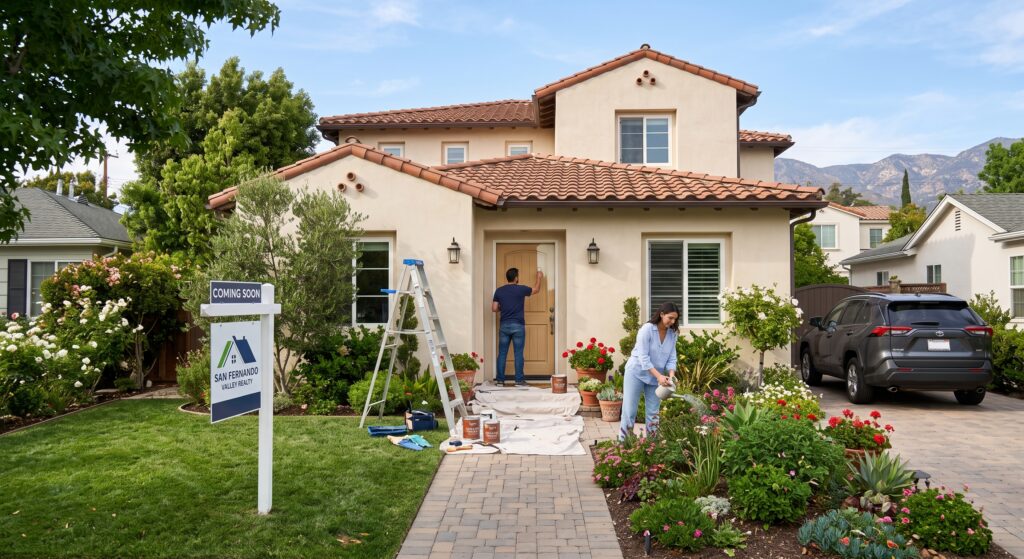
Preparing Your San Fernando Valley Home for Sale: A Step-by-Step Guide
Selling a home is a major decision.
For many San Fernando Valley homeowners, the property represents years—or even decades—of memories, maintenance, improvements, and investment. That can make preparing it for sale feel overwhelming.
Where do you start?
Do you remodel the kitchen? Paint everything? Replace the floors? Hire a stager? Fix the roof? Or simply put the house on the market and see what happens?
After working with homeowners in the San Fernando Valley, I’ve found that the best preparation isn’t necessarily about spending the most money.
It’s about spending money strategically.
The goal is to make your home appealing to today’s buyers without investing in improvements that aren’t likely to make a meaningful difference.
Here’s a step-by-step approach to getting your San Fernando Valley home ready to sell.
Step 1: Start With a Pre-Listing Walkthrough
Before making any improvements, walk through your home with a critical eye.
Try to see the property the way a buyer will see it—not the way you’ve seen it every day for the last 10, 20, or 30 years.
Look for obvious maintenance issues.
Check for:
- Cracked or damaged surfaces
- Leaky faucets
- Slow drains
- Broken fixtures
- Peeling paint
- Damaged flooring
- Worn-out landscaping
- Dirty windows
- Aging appliances
- Visible roof concerns
- Water stains
- Electrical issues
- Doors or windows that don’t operate properly
A recent San Fernando Valley seller guide similarly recommends beginning with a property walkthrough that focuses on visible maintenance items before investing in cosmetic improvements.
You don’t need to fix everything.
But you should know what a buyer is likely to notice.
Step 2: Understand Your Home’s Current Condition
Once you’ve identified potential issues, determine which ones actually matter.
This is where it can be helpful to separate improvements into three categories:
Must fix:
Problems that could affect safety, financing, inspections, or a buyer’s willingness to move forward.
Should fix:
Visible issues that could make the home feel poorly maintained or give buyers negotiating leverage.
Nice to fix:
Cosmetic improvements that could improve presentation but aren’t essential.
This distinction can keep you from spending thousands of dollars on improvements that don’t necessarily improve your sale.
Step 3: Consider a Pre-Listing Inspection
A pre-listing inspection isn’t mandatory for every seller, but it can provide useful information.
Instead of waiting for the buyer’s inspection to uncover an issue, you can learn about potential problems before the home goes on the market.
That gives you options.
You might choose to make a repair.
You might decide to disclose the condition and price accordingly.
Or you might determine that the issue isn’t significant enough to address before listing.
The important thing is having information before you’re negotiating with a buyer.
Step 4: Declutter Before You Stage
One of the least expensive ways to improve a home’s presentation is also one of the most effective:
Remove things.
Over the years, homes naturally accumulate belongings.
Furniture gets added.
Closets fill up.
Kitchen counters become storage areas.
Garages become catch-all spaces.
Buyers, however, need to see the house—not everything you’ve accumulated while living there.
Start room by room.
Ask yourself:
- Does this item need to be here?
- Does this room feel crowded?
- Can buyers easily walk through the space?
- Are countertops mostly clear?
- Do closets look usable?
- Does the garage still function as a garage?
If you haven’t used something in a long time, selling, donating, storing, or removing it can make the home feel noticeably more spacious.
Step 5: Depersonalize Without Making the Home Feel Empty
There’s a balance between removing clutter and removing personality.
You want buyers to imagine themselves living in the house.
That means highly personal items—such as excessive family photographs, collections, personal paperwork, and strongly individualized décor—may be worth putting away during the listing.
But the home shouldn’t feel sterile.
A few tasteful furnishings and carefully chosen decorative elements can help buyers understand how the rooms function.
The goal is simple:
Help buyers picture their life there.
Step 6: Improve Your Curb Appeal
The outside of your home is the buyer’s first impression.
Before they walk through the front door, they’ve already formed an opinion.
Start with the basics.
Clean the entry.
Trim overgrown landscaping.
Remove weeds.
Clean walkways and patios.
Touch up obvious exterior paint problems.
Make sure the house numbers, mailbox, lighting, and front door look well maintained.
You don’t necessarily need an expensive landscaping project.
A clean, maintained exterior can go a long way toward making the property feel cared for.
Step 7: Don’t Automatically Remodel the Kitchen
The kitchen is important, but a full kitchen remodel isn’t automatically the best investment before selling.
If your kitchen is functional but dated, smaller improvements may be enough.
Depending on the property, consider:
- Deep cleaning
- Updating cabinet hardware
- Repainting cabinets when appropriate
- Replacing damaged fixtures
- Improving lighting
- Removing unnecessary countertop items
- Touching up walls
- Replacing visibly worn flooring
The right approach depends on the home’s price point, neighborhood, existing condition, and likely buyer pool.
Before spending tens of thousands of dollars on a remodel, determine whether the improvement is likely to solve a meaningful problem.
Step 8: Make the Bathrooms Feel Clean and Fresh
Buyers don’t expect every bathroom to look brand new.
They do expect it to feel clean and well maintained.
Pay attention to:
- Grout
- Caulking
- Mirrors
- Fixtures
- Lighting
- Cabinet hardware
- Shower doors
- Towels
- Countertops
- Ventilation
Sometimes a deep cleaning and a few small updates can make a bigger difference than a major renovation.
Step 9: Address Deferred Maintenance
This is one area where sellers should be particularly careful.
A buyer who notices several small maintenance problems may start wondering what larger issues are hiding underneath.
A dripping faucet might be minor.
A damaged roof is not.
A loose cabinet handle is easy to fix.
A persistent water stain requires investigation.
Think about what the condition of your home communicates.
Well-maintained homes create confidence.
That confidence can matter when buyers are deciding how aggressively to negotiate.
Step 10: Pay Attention to Flooring, Paint and Lighting
These three elements can dramatically affect how a home photographs and feels in person.
Walls with scuffs and outdated colors can make rooms feel tired.
Worn flooring can make a property feel less maintained.
Poor lighting can make otherwise attractive rooms feel dark.
You don’t necessarily need luxury finishes.
In many cases, clean surfaces, neutral presentation, functioning lighting, and consistent finishes are more important.
The objective is to create a home that feels clean, bright, comfortable, and easy to imagine living in.
Step 11: Make Outdoor Space a Selling Feature
In the San Fernando Valley, outdoor space can be an important part of how buyers experience a home.
Don’t treat the backyard as an afterthought.
Clean patios and decks.
Trim trees and shrubs.
Remove dead plants.
Organize outdoor furniture.
Create a clear sense of how the space can be used.
If you have a pool, make sure it is clean and properly maintained.
If you have a large yard, help buyers understand its possibilities.
A buyer should be able to look at the backyard and imagine themselves using it.
Step 12: Think About Safety and Privacy Before Showings
Preparing a home for sale also means preparing it for strangers to visit.
Put away valuables and sensitive documents.
Secure personal information.
Remove medications and other items that shouldn’t be accessible.
Consider what personal information is visible in photographs.
The goal is to make showings comfortable for buyers while protecting your household and belongings.
Step 13: Get Your Paperwork Organized
Selling a home involves more than cleaning and photography.
Start gathering relevant documents early.
Depending on the property, these may include:
- Previous purchase information
- Remodeling records
- Permits
- Receipts for major improvements
- Roof information
- Solar documents
- Appliance warranties
- HOA documents, if applicable
- Relevant property reports
- Other records related to the home
Having documentation available can make the transaction smoother and help answer questions from prospective buyers.
It can also be particularly useful when you’ve made substantial improvements over the years.
Step 14: Be Ready for California Disclosure Requirements
California sellers have important disclosure responsibilities.
Don’t wait until you have an accepted offer to start thinking about what needs to be disclosed.
Work with your real estate professional and appropriate legal or other qualified professionals to understand what disclosures apply to your property and circumstances.
If you’ve experienced issues such as water damage, repairs, additions, known defects, or other significant property conditions, document what you know.
Transparency is important.
The goal isn’t to make your property sound perfect.
It’s to provide buyers with the information they need to make an informed decision.
Step 15: Determine Which Improvements Are Actually Worth It
This is where preparation becomes strategic.
Not every improvement deserves your money.
Before starting a project, ask:
Will this improve the home’s first impression?
Will buyers notice it?
Will it help the property compete with comparable homes?
Is the improvement consistent with the neighborhood?
Could the money be better spent somewhere else?
A $2,000 improvement that solves a visible problem may be more valuable than a $20,000 renovation that buyers don’t particularly care about.
Step 16: Stage the Home for the Buyer, Not Yourself
Once the repairs and decluttering are complete, look at the furniture arrangement.
Does each room have an obvious purpose?
Can buyers easily walk through the home?
Does the furniture make rooms feel larger or smaller?
Are windows blocked?
Is there enough light?
Staging isn’t about creating a fake lifestyle.
It’s about presenting the home’s best qualities clearly.
Sometimes that means rearranging furniture.
Sometimes it means removing furniture.
Sometimes it means bringing in a few pieces that make an empty space feel more inviting.
Step 17: Invest in Professional Photography
Your home’s first showing often happens online.
Before a buyer schedules a showing, they’re likely looking at photographs.
That means photography isn’t an afterthought.
Clean the house first.
Complete the repairs.
Finish the landscaping.
Then photograph it.
Good photography should accurately represent the property while showing its strongest features.
Don’t photograph a cluttered house and hope buyers can see past it.
Prepare first. Photograph second. List third.
Step 18: Price the Home Based on the Current Market
Even a perfectly prepared home can struggle if it’s priced incorrectly.
Your asking price should be based on current market evidence—not simply what you paid for the home, how much you spent remodeling it, or what you hope to make.
Recent comparable sales are important, but so are current competing listings, property condition, location, lot characteristics, improvements, and buyer demand.
San Fernando Valley sellers should also remember that list prices don’t necessarily tell the entire story. Recent local market commentary emphasizes the importance of looking at actual sale prices rather than assuming an asking price represents a property’s market value.
The goal is to position your property where today’s buyers will recognize its value.
Step 19: Have a Showing Strategy
Before the first buyer walks through the door, decide how showings will work.
Keep the house clean.
Make beds.
Clear counters.
Turn on appropriate lights.
Secure valuables.
Take pets out when possible.
Make it easy for buyers to move through the property.
And don’t underestimate the importance of flexibility.
A buyer who is serious about purchasing may not always want to see the property at the most convenient time for you.
Step 20: Let the Market Give You Feedback
Once your home is listed, pay attention to what happens.
Are buyers scheduling showings?
Are they staying for a reasonable amount of time?
Are agents consistently commenting on the same issue?
Are you getting offers?
Are buyers showing interest but hesitating?
Market feedback can help determine whether the issue is presentation, condition, pricing, or something else.
Don’t automatically react to every comment.
Look for patterns.
A Practical Timeline for Preparing Your Home
You don’t necessarily need months to prepare.
The timeline depends on the property’s condition and how much work you want to complete.
Several Weeks Before Listing
Start with your walkthrough.
Identify repairs.
Gather paperwork.
Declutter.
Determine which improvements are worth making.
Two to Three Weeks Before Listing
Complete repairs.
Refresh landscaping.
Deep clean.
Finish painting or flooring projects.
Begin staging.
One Week Before Listing
Complete final cleaning.
Finish photography preparation.
Organize documents.
Make sure the property is ready for showings.
Before Going Live
Review the marketing.
Confirm the pricing strategy.
Make sure the property is photographed properly.
Then launch.
The exact timeline will vary by property, but the principle is the same:
Don’t wait until the day before listing to start preparing.
What San Fernando Valley Sellers Should Avoid
There are also a few common mistakes worth avoiding.
Don’t renovate everything
You don’t need to turn your home into a brand-new house.
Don’t ignore obvious repairs
Visible problems can make buyers wonder about hidden ones.
Don’t over-personalize the presentation
Buyers need to imagine themselves living there.
Don’t rely only on online estimates
Automated estimates can’t fully account for condition, improvements, lot characteristics, and hyperlocal differences.
Don’t choose your price based solely on what your neighbor listed for
An asking price isn’t necessarily a sale price.
Don’t wait until you’re under contract to organize everything
Preparation reduces surprises later.
The Bottom Line
Preparing your San Fernando Valley home for sale doesn’t have to mean spending a fortune.
The smartest approach is usually strategic preparation.
Start with the condition of the property.
Fix the issues buyers will notice.
Declutter.
Improve curb appeal.
Create clean, functional spaces.
Prepare the outdoor areas.
Organize your documentation.
Understand your disclosure obligations.
Then photograph and market the home properly.
Most importantly, price it based on what the current market is telling you—not what you wish it would say.
Every San Fernando Valley home is different. A 1950s ranch in Northridge requires a different strategy from a remodeled home in Sherman Oaks, a property in Encino, or a newer home in Porter Ranch.
That’s why preparation should be tailored to the individual property.
If you’re thinking about selling, the best time to start preparing is before you’re ready to list.
A little planning can make the process smoother, help buyers see the home’s strengths, and put you in a stronger position when it’s time to negotiate.